
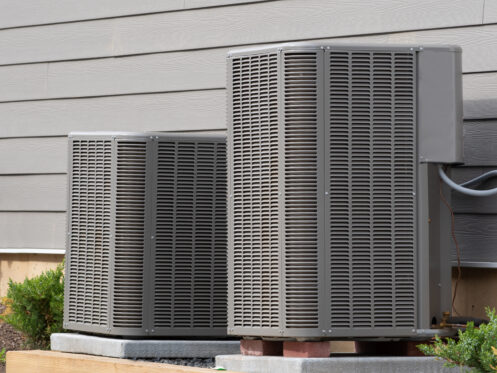
When spring temperatures start rising, your air conditioner begins running longer and producing more condensation. That moisture normally drains away through a small line connected to the indoor unit, though problems in that line can quickly lead to water leaks inside the home. Many homeowners focus on cooling performance but overlook the drainage system that handles all that collected moisture. At General Air Conditioning & Plumbing, in Palm Springs, CA, we help homeowners inspect air conditioning components that protect the home from water damage during the cooling season.
What the Condensate Drain Does Inside Your Cooling System
Your air conditioner does more than cool the air. It also removes moisture from the indoor air as warm air passes across the evaporator coil. When that air cools, water forms on the coil surface. This moisture drips into a drain pan and then flows through a condensate drain line, carrying the water away from the system. Under normal conditions, this process happens quietly every time the system runs.
During warm months, a large amount of water can move through this small drainage path. A busy cooling system may produce several gallons of condensation in a single day. The drain line carries that water outside or to a designated drainage area, so it does not remain inside the home.
When the line works the way it should, you never notice it. When it stops working properly, the water has nowhere to go. It begins to collect in the drain pan or back up along the line.
Why Drain Lines Tend to Clog in Spring
Condensate drain problems often appear in spring because the system begins running more frequently after months of limited use. During winter, the drain line may sit idle for long periods. Dust, algae, and debris can accumulate in the pipe’s interior because of moisture. Once the cooling system starts producing condensation again, that buildup can restrict water flow.
Warm weather also creates conditions where organic growth develops inside the line. Moisture, darkness, and warm air allow algae and microbial buildup to form along the pipe walls. Over time, that material thickens and slows water flow. When enough buildup accumulates, the line can block completely.
Another issue comes from dirt entering the drain pan area. Air moving through the system carries small particles that settle near the coil and pan. Those particles eventually wash into the drain line as condensation flows through the system.
Early Signs of a Condensate Drain Problem
Drain issues often reveal themselves through small changes around the indoor unit. One common sign is standing water near the air handler. You may notice moisture around the base of the system or on the surrounding floor. This water typically appears slowly as the drain pan fills.
You may also notice a damp smell in the area around the unit. When water remains trapped in the pan or line, it can create conditions that allow odor to develop. This odor may spread to nearby rooms if the system continues to operate while the drain line remains blocked.
Another warning sign appears when the cooling system shuts off unexpectedly. Many systems include a safety switch that stops operation if the water level in the drain pan rises too high. This feature protects the home from flooding, though it often surprises homeowners when the air conditioner suddenly stops running.
How a Blocked Drain Can Lead to Indoor Water Damage
When condensation cannot leave the system, the drain pan becomes the first place where water collects. The pan can hold only a limited amount before overflow begins. Once that happens, water spreads across nearby surfaces.
If the air handler sits in an attic, water may drip through ceilings and appear as stains in rooms below. When the system is in a closet or utility room, moisture may soak into the flooring and baseboards. In both situations, the water travels quietly until visible damage appears.
Moisture inside building materials creates additional problems. Wet drywall can soften and lose structure. Wooden framing can absorb water and expand. Insulation around the air handler can become saturated, reducing its ability to control indoor temperature.
Where the Drain Line Runs and Why Its Location Matters
The condensate drain line usually runs from the indoor air handler to a location outside the home or to a dedicated plumbing drain. The path may pass through walls, attics, crawl spaces, or utility rooms before it exits the house. Because the line runs through hidden areas, clogs can develop without obvious warning until water begins to collect near the equipment.
The pipe must maintain a consistent downward slope so gravity can carry condensation away from the system. If the line shifts, sags, or develops buildup in a low spot, water flow slows and eventually stops. When that happens, condensation backs up toward the drain pan. Understanding where the line runs can help explain why minor drainage issues within the pipe can quickly lead to visible water around the indoor unit.
Why Professional Service Matters When Drain Problems Appear
A clogged condensate drain line may seem like a small plumbing issue, though it connects directly to the performance and safety of the cooling system. Clearing the line requires proper inspection of the drain pan, the piping, and the surrounding components. A technician checks whether water has already caused hidden damage inside the equipment compartment.
Professional service also involves identifying what caused the blockage. If algae buildup or debris accumulation created the clog, the entire line may require cleaning rather than a simple opening at one point. Technicians also inspect the pan condition and confirm that safety switches and drainage connections operate correctly.
Ignoring the problem or delaying service allows water to continue collecting inside the system. Even a slow leak can cause structural damage if it continues for several days. Calling for service as soon as moisture appears reduces the risk of larger repairs inside the home.
Spring Maintenance Helps Prevent Drain Problems
Seasonal maintenance helps identify drainage problems before the cooling season reaches full demand. During a maintenance visit, technicians inspect the evaporator coil, drain pan, and condensate line while the system is operating. This allows them to confirm that water flows through the drainage system without restriction.
Maintenance also includes cleaning areas where debris collects near the coil and pan. Removing buildup at the source reduces the amount of material entering the drain line later in the season. Technicians can also verify that the drainage pipe maintains the proper slope to ensure water flows freely toward its exit point.
Regular inspection prevents many of the surprises that occur once temperatures climb. When the condensate system remains clear, the cooling equipment can remove humidity and direct moisture outside the home without interruption.
Keep Cooling Systems Dry and Working Properly
A well-maintained air conditioner removes heat and humidity while directing condensation safely outside the home. When drainage issues occur, water can collect near the indoor unit, causing damage to nearby floors, walls, or ceilings. We help homeowners maintain cooling systems with AC maintenance, drain line clearing, system inspections, and air conditioning repair. Do you have AC condensate drain problems? Contact General Air Conditioning & Plumbing to schedule service to keep your cooling system running efficiently and prevent unwanted indoor water problems this season.