
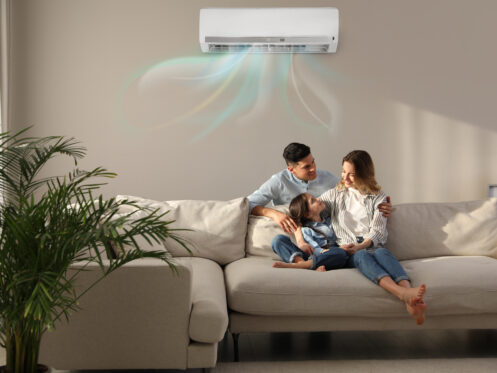
The start of a new year is the time to look around your home to consider what is working well and what is old and outdated. If your heating and cooling setup leaves some rooms chilly and others stuffy, or your utility bills creep higher every season, it may be time for a new system. Mini-split systems offer flexible heating and cooling with modern controls that cater to your current lifestyle.
One Compact System for Year-Round Comfort
A mini-split is a type of heat pump that handles both heating and cooling. Outside, you have a small condenser unit. Inside, you have one or more wall, floor, or ceiling units that deliver conditioned air directly to the rooms you use. Instead of burning fuel, the system moves heat. In winter, it pulls low-level heat from outside air and brings it in. In summer, it moves unwanted heat from inside your home to the outdoors. That same outdoor unit works for you in every season, keeping the setup simple.
This design makes mini-splits especially attractive if you are tired of juggling space heaters, window units, or box fans. You set your desired temperature using a remote or app, and the indoor unit does the fine-tuning. There is no waiting for a central system to push air through long ducts and no guessing which vent will finally make that bonus room usable. You get focused heating and cooling where you spend your time, all from a system built for year-round use.
Zoned Heating and Cooling Where You Need It
One of the biggest advantages of a mini-split system is zoning. Each indoor unit controls its own area, so you are not locked into one temperature for the entire house. Perhaps you want your bedroom a little cooler at night, while someone working from home needs a warmer office during the day. With a ductless setup, each space can have its own setting. You are no longer overheating one room to keep another from feeling cold.
This zoning comes in handy for tricky spaces. Finished basements, attic rooms, sunrooms, and additions often exceed the capacity of your existing ductwork. Rather than stretching a central system farther than it was designed to go, you can give those spaces their own mini-split indoor head. The result is more even comfort with fewer arguments over the thermostat. You heat and cool the rooms you use, rather than wasting energy on empty areas that stay closed off most of the day.
Efficiency That Supports Your Energy Goals
Mini-splits are known for strong efficiency because they avoid some of the losses that come with long duct runs. When air moves through old or leaky ducts, a portion escapes into attics, crawlspaces, or wall cavities. With a ductless system, you skip that detour and send treated air straight into the room. Modern heat pump technology also means the outdoor unit can move more heat with less electricity than older equipment.
You recognize that difference when the utility bill arrives. Many homeowners see a drop in energy costs when they switch from electric baseboard heat, space heaters, or older window units to a well-sized mini-split system. The equipment modulates output instead of blasting at full capacity every time it starts. That steady, right-sized operation uses energy more thoughtfully. If you plan to add solar panels at some point, an efficient ductless setup can also be a strong partner, since it already runs on electricity.
Smart Controls and Quiet, Modern Operation
Mini-splits fit nicely into a connected home. Many models offer built-in Wi-Fi or simple add-on modules that let you control settings from your phone. You can adjust the temperature before you leave work, set schedules for sleeping and waking hours, or switch a unit off if you realize no one is using that room. Those small adjustments help the system match your real routine instead of running your heating and cooling equipment the same way all day, every day.
Noise is another area where ductless systems benefit homeowners. The loudest parts of the system sit outside, and even those tend to run more quietly than older condensers. Indoors, you typically hear only a soft fan sound when the unit ramps up. That quiet operation is important if you plan to use a mini-split in a nursery, home office, or media room. You can take calls, watch movies, or sleep through the night without the sudden roar that often comes with older central systems cycling on.
Where Mini-splits Make the Most Sense
A mini-split can serve an entire small home, a large open-plan space, or just a few targeted rooms. If you have an older house with no existing ductwork, ductless equipment can save you from major construction. Instead of opening ceilings and walls to run new ducts, a technician runs small refrigerant lines through discreet wall penetrations. You keep more of your original finishes and often complete the project more quickly.
Mini-splits also work well as support systems for busy zones. Maybe you have a central furnace or heat pump that handles most of the house, yet one corner room never feels quite warm or cool enough. Installing a single ductless unit there lets you stop fighting with dampers and thermostat settings that affect the entire building. You give that space a separate comfort tool. The same idea applies to garages that double as workshops or studios. A dedicated mini-split can turn that area into a true four-season workspace rather than a room you use only on mild days.
Planning a Mini-split Project for the New Year
If you are thinking about a mini-split for the new year, your first step is a conversation with a professional who works with these systems regularly. Your professional will want to walk the space, examine window sizes, ceiling heights, and insulation levels, and talk with you about how you use each room. Sizing matters. A unit that is too small will run constantly and still leave you unhappy. A unit that is too large can short-cycle and fail to deliver both comfort and efficiency.
During that visit, you can discuss with your technician about mounting options and aesthetics as well. Wall-mounted heads can be effective in many situations, while floor or ceiling units make more sense in others. You will also want to discuss electrical needs and the placement of the outdoor unit on the property. By the end of the planning process, you should have a clear understanding of the number of zones you require, what each area will handle, and the project timeline. That level of detail helps you move forward with confidence instead of guessing at a major upgrade.
Start the New Year With Smarter Comfort
A mini-split system offers flexible heating and cooling, zoning, and modern controls that fit the way you live today, not the way your house was set up decades ago. Along with new installations, General Air Conditioning & Plumbing in Thousand Palms can help with ductless maintenance, filter changes, and repairs that keep your equipment running efficiently throughout every season. Call us today to schedule a mini-split consultation.