
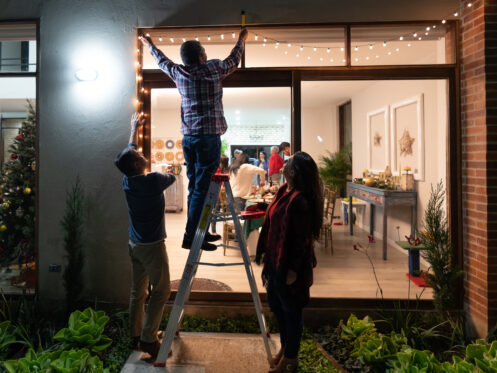
When the temperature starts to drop in the Palm Springs, CA area, many of us look forward to the holiday season ahead. One common way to celebrate is by stringing up lights outside your home to show festivity. To ensure that you stay safe while hanging up and running your holiday lights, we’ll share our best advice from General Air Conditioning & Plumbing.
Extension Cord Safety
Extension cords are used by a lot of people to supply temporary power to holiday lighting. There are a few different safety practices you’ll want to keep in mind when using extension cords to ensure optimal safety for your home and family. First and foremost, always opt for an extension cord that is rated for the outdoors. Never use indoor cords outside, as they’re not resistant to water and UV damage.
When selecting an extension cord, choose a cord that’s of the appropriate length for your application. You never want to use an extension cord that’s too long and leave it coiled up. Doing so could cause the cord to overheat and catch fire. All extension cords have a set power rating that they can handle. Be sure to check the maximum power draw of any item that you’ll be plugging into the extension cord to ensure that your extension cord’s rating exceeds that amount.
Another factor to keep in mind when using extension cords is that you don’t want to plug multiple cords into one another. Aim for one extension cord per outlet. Make sure that any extension cord that you’re using isn’t damaged or worn in any way. Extension cords should run through locations that are free from pooling water. Additionally, you don’t want to run them through walkable pathways, as they can be a tripping hazard.
It’s highly advisable to staple your extension cords in place to ensure factors like wind gusts don’t cause them to move. When applying electrical staples, it’s vitally important that you don’t put the staple in too tightly. It should be tight enough that the staple won’t pull out. However, there should still be adequate space between the staple and the cord. You never want the staple pushing against the cord, as that can lead to overheating, electrical shock, or fire.
Use Proper Outdoor Outlets
When plugging in your outdoor lighting, you should only be using outdoor outlets. Never run extension cords through windows or doors to your indoor outlets. This can allow water to seep through the cord into your home and the outlet. It’s important to make sure your outdoor outlet is GFCI protected. If your outdoor outlet doesn’t have GFCI protection, it’s best to have one of our electricians upgrade your outdoor outlet for your safety.
Use Outdoor-Rated Lighting and Decor
Plenty of homeowners like to decorate both indoors and outdoors for the holiday season. When putting up any lights or other decor outside, it’s imperative that you ensure the product is rated to be used outdoors. Outdoor-rated products are specifically designed to be water and UV-resistant but also have more durable components. They are resistant to rust and corrosion.
Always Inspect Before You Install
Whether you’re purchasing new holiday lighting or using your light strands and decorations from last year, they should all be appropriately checked before putting them to use. When you check your light strands, ensure that there are no cracked bulbs or exposed wiring. If there are any defects in the insulating layer, like cut marks or compression marks, it’s best to avoid using those light strands. Compressed strands could lead to overheating and a fire risk. Cracks can allow water penetration and potential electrocution to those who encounter them.
Don’t Overload Electrical Circuits
It can be easy to get carried away when you’re in the holiday spirit. However, don’t neglect to pay attention to how many items you’re plugging into certain electrical circuits. If you notice that your lights seem to flicker when you’re using that circuit, it can mean that you’re overloading it. Aim to spread out your lighting usage over multiple electrical circuits in your home. If your home still has less than 200 amps of power at your electrical box, it’s time to consider upgrading.
Be Mindful About Ladder Safety
One area of your home that may have holiday lighting on it is your roofline. This process typically involves using a ladder to safely reach where you’ll be adhering the lights. It’s always best to opt for a fiberglass or wooden ladder over a metal one. Metal ladders will conduct electricity, meaning that if they encounter electricity, they can electrocute you.
Fiberglass and wood don’t conduct electricity, meaning they’re a safer option when you’ll be hanging up lights anywhere near power lines. Additionally, make sure that you’re placing your ladder at least five feet away from any power line for your ultimate safety. Always use three points of contact when climbing your ladder to prevent accidental falling.
Have a Fire Extinguisher Accessible
Adding holiday lighting to your home’s exterior can increase your risk of experiencing a house fire. It’s always a good idea to have a fire extinguisher within an easily accessible distance so you can respond quickly when a problem occurs. All fire extinguishers have a rating that tells you what type of fire they can put out. When it comes to electrical fires, you need a fire extinguisher rated as type C fires. A fire extinguisher with an ABC rating will also work.
Consider Upgrading Outdated Technology
If you’re still using outdated incandescent lights to decorate your home during the holiday season, it’s time to think about upgrading. Incandescent bulbs generate a lot of heat, presenting a higher fire risk for your home than LED lights. Additionally, incandescent lighting can use 80% to 90% more energy than LED lighting. To keep your energy bills in check this winter season, opt for installing LED holiday lighting.
Use Protective Covers Outdoors
One other safety consideration to keep in mind is that you should be using protective covers when you’re plugging your cords in outside. Whether it’s plugging a cord into an extension cord or plugging your extension cord into an outlet, it should have a cover over it. This will protect it from any adverse weather conditions that could impact the outlet or cord and cause an issue.
Follow Manufacturer Recommendations for Daisy-Chaining
Whenever you plug two light strands into one another, it’s referred to as daisy-chaining. This is acceptable practice if you have appropriate equipment. Some light strands are specifically designed to integrate with others for a seamless look. However, you must follow the manufacturer’s recommendation on how many strands you can link together. For example, most incandescent lighting strands recommend only plugging three together, while LEDs can allow you to plug 10 or more together.
Expert Electrical Installation Services
General Air Conditioning & Plumbing offers expert electrical installation services for the Palm Springs area. We are an authorized dealer for JellyFish Lighting across the Greater Coachella Valley, which offers homeowners the exciting opportunity to transform their properties with this cutting-edge outdoor lighting solution.
We can also assist with all your electrical replacement, repair, and inspection needs. Just call our office today to book your next service appointment with one of our fully licensed electricians at General Air Conditioning & Plumbing in Palm Springs.