
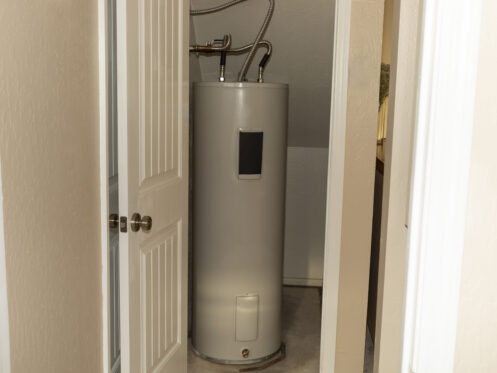
Living in the Coachella Valley, you need a steady supply of water for everything from morning showers to evening dishes. Yet many homeowners do not realize what local water can leave behind in their systems. Minerals that ride along in hard water settle quietly at the bottom of your tank and along heating surfaces, changing how your water heater works day to day.
Hard Water Sediment: What It Does Inside Your Tank
Hard water carries minerals like calcium and magnesium. When that water heats inside a tank-style water heater, those minerals can separate from the water and settle at the bottom of the tank as gritty sediment. Picture a thin layer of wet sand that slowly thickens with daily use. That layer reduces the space available for hot water and changes how heat moves through the system.
In a gas unit, the burner heats the base of the tank. Sediment can form a barrier between the flame and the water, forcing the system to run longer to reach the same water temperature. In an electric unit, sediment can build up around the lower heating element, causing it to run hotter than designed. That added strain can shorten the working life of internal parts.
You might notice rumbling sounds during heating cycles, shorter hot water supply during showers, or water that cools faster than it used to. These are often early signs that sediment is taking up space and interfering with the heater’s operation.
Why Flushing Matters in Hard Water Conditions
Flushing a water heater helps clear out loose sediment that collects at the bottom of the tank. When water flows through the drain valve, it carries mineral particles out of the system, restoring some of the space sediment had occupied. This improves how heat transfers into the water and helps the heater recover more quickly between uses.
Another benefit of flushing is keeping the drain valve functional. If sediment sits undisturbed for years, it can harden and block the valve opening. That can turn a simple service visit into a more complicated repair. A working drain valve matters if the tank ever needs to be serviced or replaced.
Flushing can also improve water clarity. When sediment stirs up inside the tank, tiny particles can travel to your sinks and tub. This can cause cloudy water or small flakes that show up in the basin. Clearing the tank reduces the amount of debris that moves through your plumbing.
Tank and Tankless Systems Handle Minerals Differently
Hard water affects all water heaters, but the type of unit you have changes how mineral buildup shows up. In a tank-style heater, minerals settle as sediment at the bottom. In a tankless heater, minerals tend to form scale inside the narrow passages of the heat exchanger. This scale restricts water flow and slows heat transfer.
With a tankless unit, you may notice water shifting from hot to cool during a shower, especially when another faucet turns on. The system can struggle to maintain a steady output when the scale narrows internal channels. Some units may display error codes related to flow or heating limits.
Tankless systems are cleaned through a descaling process that circulates a cleaning solution through the unit. This work requires proper isolation of the system and careful monitoring of flow, which is why it’s best handled by a trained plumber rather than attempted as a home project.
Early Signs That Mineral Buildup Is Causing Trouble
Many water heaters show warning signs before performance drops significantly. Noise is one of the most common. Popping or cracking sounds during heating cycles often come from sediment heating and shifting at the bottom of the tank. These sounds can become more noticeable during long hot water use, such as laundry or multiple showers in a row.
Slow recovery is another signal. Recovery refers to how fast the heater can warm a fresh tank of water after the hot supply is used. If recovery time increases, you may run out of hot water sooner even if your routine stays the same. This often points to reduced heat transfer caused by sediment.
You may also notice changes in how the hot water looks or smells. Cloudy water or a mild metallic scent can come from mineral content inside the tank. If you see moisture around the base of the heater, that can indicate a more serious problem related to corrosion or pressure that needs professional attention.
Flushing as Part of a Full Maintenance Check
Flushing works best when it’s paired with a full system review. During a service visit, a plumber will check the shutoff valve to confirm it closes fully and does not leak. This matters if the unit ever needs repair or replacement.
The pressure relief valve, often called the TPR valve, is another critical part of the inspection. This valve releases water if the tank overheats or pressure rises too high. It must be able to open and drain safely. Testing and replacing this valve should be handled by a professional, since improper handling can create leaks or unsafe conditions.
The anode rod is also important. This metal rod is designed to corrode so that the tank does not. In hard water, the rod can become coated with minerals or wear down faster. When the anode is depleted, the tank itself begins to corrode more quickly, which can lead to early failure.
How Sediment Changes Daily Hot Water Use
Mineral buildup often shows up in small, frustrating ways. One example is uneven hot water while showering. The water may start hot and then cool sooner than expected. This can happen when sediment reduces the usable volume inside the tank.
Sediment can also interfere with how the thermostat senses water temperature. The top of the tank may reach the target level while cooler water remains near the bottom. This can cause longer heating cycles and inconsistent output at the tap.
Another effect is debris traveling into fixtures. Tiny mineral particles can lodge in faucet aerators and showerheads, reducing flow or creating uneven spray patterns. Cleaning or replacing the fixture may solve the symptom, but the source often remains inside the water heater.
After the tank is refilled, air is purged from the system before heating resumes. This step prevents damage to heating elements and helps confirm the system returns to normal operation with steady hot water output.
Keep Your Hot Water Working With You, Not Against You
Hard water is part of life in the Coachella Valley, but it doesn’t have to shorten the life of your water heater or drive up your energy use. Routine flushing, paired with professional inspections, pressure checks, and sediment control options, can make a noticeable difference in how your system performs year after year. At General Air Conditioning & Plumbing, we help you stay ahead of mineral buildup with water heater maintenance, system evaluations, and solutions that fit your home’s water quality and usage. If your hot water feels less dependable than it used to, schedule a service visit with General Air Conditioning & Plumbing in Palm Springs and start protecting your system today.